Warm to Get Sleepy, Cool to Stay Asleep: The Thermoregulation Paradox of Human Sleep
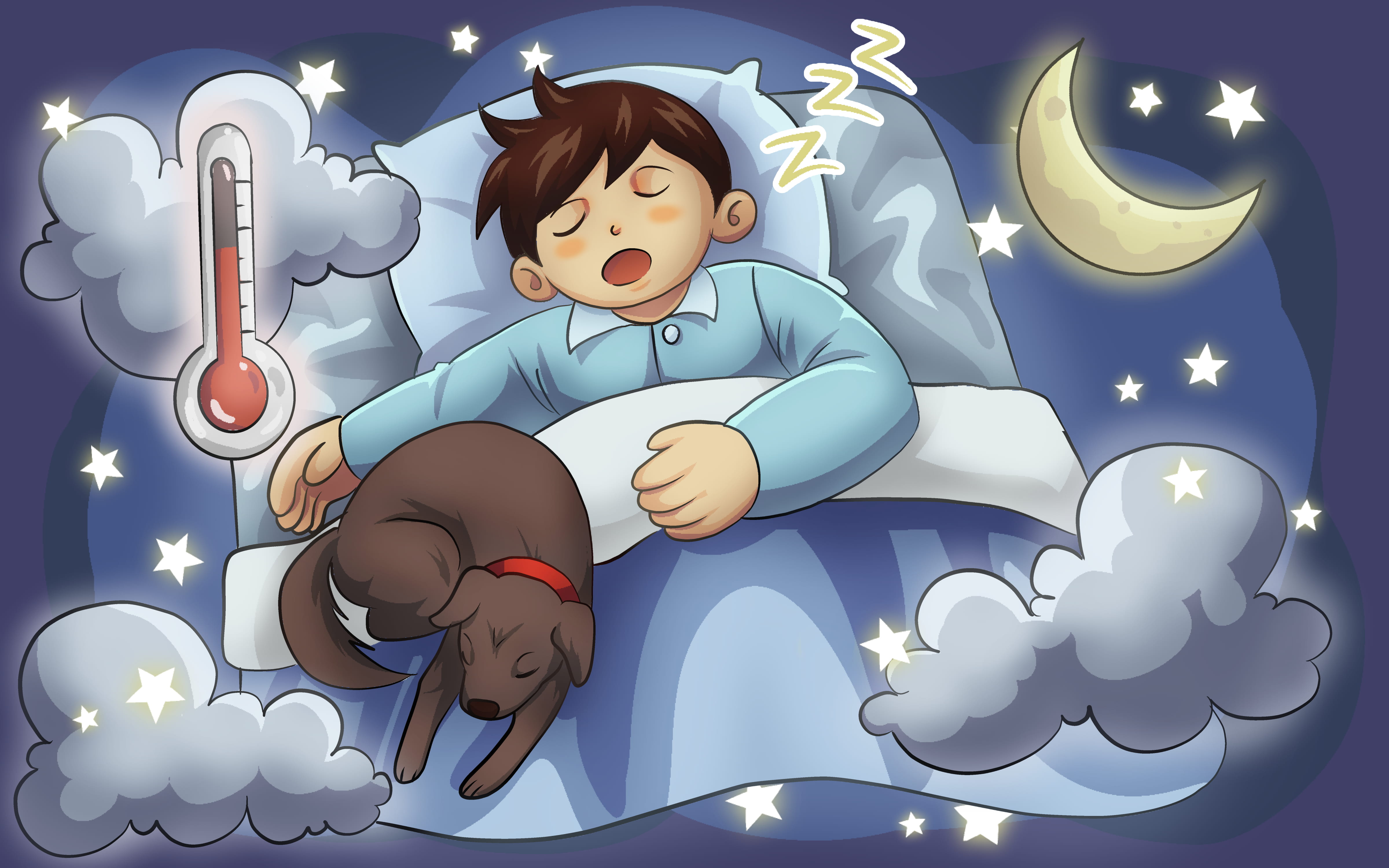
This research investigates the apparent contradiction between warmth-induced sleepiness and the well-documented benefits of cooler sleeping environments. Drawing on peer-reviewed studies in sleep physiology and thermoregulation, the report examines how temperature influences sleep onset, sleep maintenance, and sleep architecture, translating these findings into a clear explanation accessible to a general audience.
Research Complete
Key Findings
- 1.Warmth promotes sleepiness by triggering vasodilation in the hands and feet. This moves heat from the body's core to the skin surface, lowering core temperature, which is the primary physiological signal for sleep onset.
- 2.A warm bath or shower 1-2 hours before bed significantly reduces the time it takes to fall asleep by accelerating this natural heat-loss process.
- 3.Once asleep, cooler room temperatures (not cold) are essential. When heat can't escape the body, it disrupts deep sleep and REM sleep, the stages responsible for memory, emotional regulation, and physical restoration.
- 4.The distal-proximal skin temperature gradient (the difference between hand/foot temperature and core temperature) is the single strongest predictor of how quickly someone falls asleep, outperforming both core body temperature and subjective sleepiness measures.
Research Journey
Research Plan Finalized
Research plan and methodology finalized. 16 peer-reviewed sources identified covering sleep physiology, thermoregulation, and ambient temperature studies.
Final Report: The Thermoregulation Paradox of Human Sleep
Through a narrative review of peer-reviewed research spanning circadian biology, thermoregulation, and environmental sleep science, the report resolves the everyday paradox of why warmth makes us drowsy yet cool rooms give us better sleep. The answer lies in two distinct phases: sleep initiation (driven by heat redistribution from core to skin via vasodilation) and sleep maintenance (which requires sustained low core temperature enabled by cooler environments). The report synthesizes 16 primary sources including landmark studies on the distal–proximal skin temperature gradient, passive body heating meta-analyses, and environmental sleep architecture research.
Discussion20
There's also a glymphatic system angle here. Waste clearance in the brain during sleep appears to be more efficient at lower ambient temperatures, at least in mice. The Nedergaard lab published on this. Whether it translates to humans is still an open question but it's another reason cool sleep environments keep showing up as beneficial.
Worth flagging that the glymphatic work is almost entirely in rodents and the temperature manipulation conditions are pretty extreme compared to what humans experience. The core thermoregulation story is much better established in human trials.
So I was right about the 16 degrees. Vindication. Sending this to my wife.
I ran a cheap temperature sensor in my bedroom for a month and cross-referenced it with my Oura ring sleep scores. The correlation between lower room temperature and higher deep sleep percentage was surprisingly clean. Not exactly lab conditions but convincing enough for me.
16 sources and none of them are selling me a mattress. This is exactly what I wanted.
shared this with a few colleagues. genuinely useful, especially the section on why ward temperature matters for patient recovery. thank you for funding this
I keep my bedroom at 16 degrees and my wife thinks Im insane but I sleep like a rock so whos really winning here
See I'm the opposite. Can't fall asleep unless I'm under a heavy duvet first, then I kick it off in the middle of the night. Every single time. Maybe that's the vasodilation thing happening in real time.
the wards are always freezing and honestly patients do sleep better for it. we had a heatwave last summer and the difference was brutal, people were restless all night.
It's a mammalian thing broadly. Core temperature has to drop for sleep onset, and most mammals seek out cooler environments when they're ready to sleep. The hospital temperature thing isn't an accident, even if the reason is usually about infection control rather than sleep.
So evolution gave us a system where comfort and function are opposites. Sounds about right.
The core temperature drop is definitely part of it, something about vasodilation in the extremities signalling the hypothalamus. But I've never found a good explanation for why the drowsiness and the actual sleep quality seem to work against each other. It's like two different systems that aren't coordinated. Would be interested to see if the research pins down where exactly the disconnect happens.
That's exactly the gap I keep running into. I can find the vasodilation explanation and I can find the "keep your room cool" advice but nobody connects them into one story. This is why I proposed it.
Is there actually a controlled study on this or is it all just sleep hygiene advice recycled from the same three papers?
There are RCTs on this, not just hygiene advice. I've seen at least one decent meta-analysis on ambient temperature and sleep efficiency. The data is real, I just haven't seen anyone lay out the full mechanism clearly. That's kind of the point of the proposal.
honestly impressed this got done so fast. read the whole thing. one question though, does any of this change for people who work night shifts? the circadian angle felt underexplored